


Aims and objectives
The Life Laerthes Project stems from a strong partnership between several companies, industry specialists, and academic institutions (Guaresi Spa, Ecothea Srl, Politecnico di Torino, and Conesa SA). Together, they were the first in the field of agricultural harvesting machinery to develop know-how that combines agronomic expertise with advanced technology and manufacturing and distribution excellence. The different areas of know-how and expertise involved aim not only to build two fully functional prototypes capable of meeting the project’s KPIs, but also to develop core expertise that can be flexibly transferred and integrated into other self-propelled machines for transplanting, spraying, and above all for harvesting both industrial crops and cereal commodities.
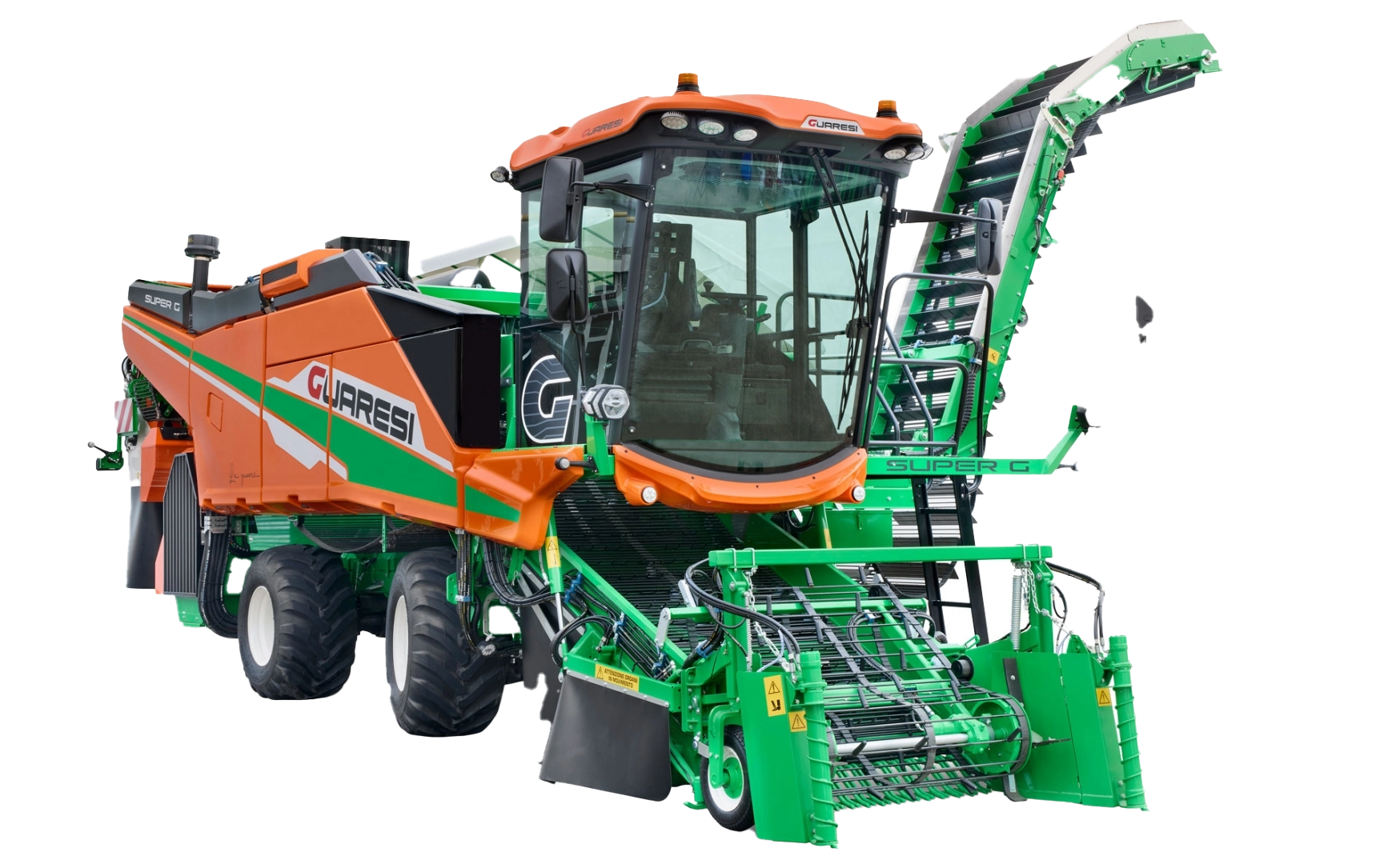
Specifically, the project’s mission is to design and test two next-generation prototypes for industrial tomato harvesting, a potential first step towards a true revolution across the entire sector. This goal aligns with the following objectives, which are also consistent with the current vision of the European Community, a co-financier of the project.
The CHALLENGE in agriculture – “zero atmospheric pollution”
MAKING IT SUSTAINABLE for the modern farmer to choose innovative machinery designed to deliver, at the same time:
- environmental sustainability
- lower fossil fuel (diesel) consumption per unit of cultivated area and/or per tonne of harvested product
- significantly better performance than traditional machines
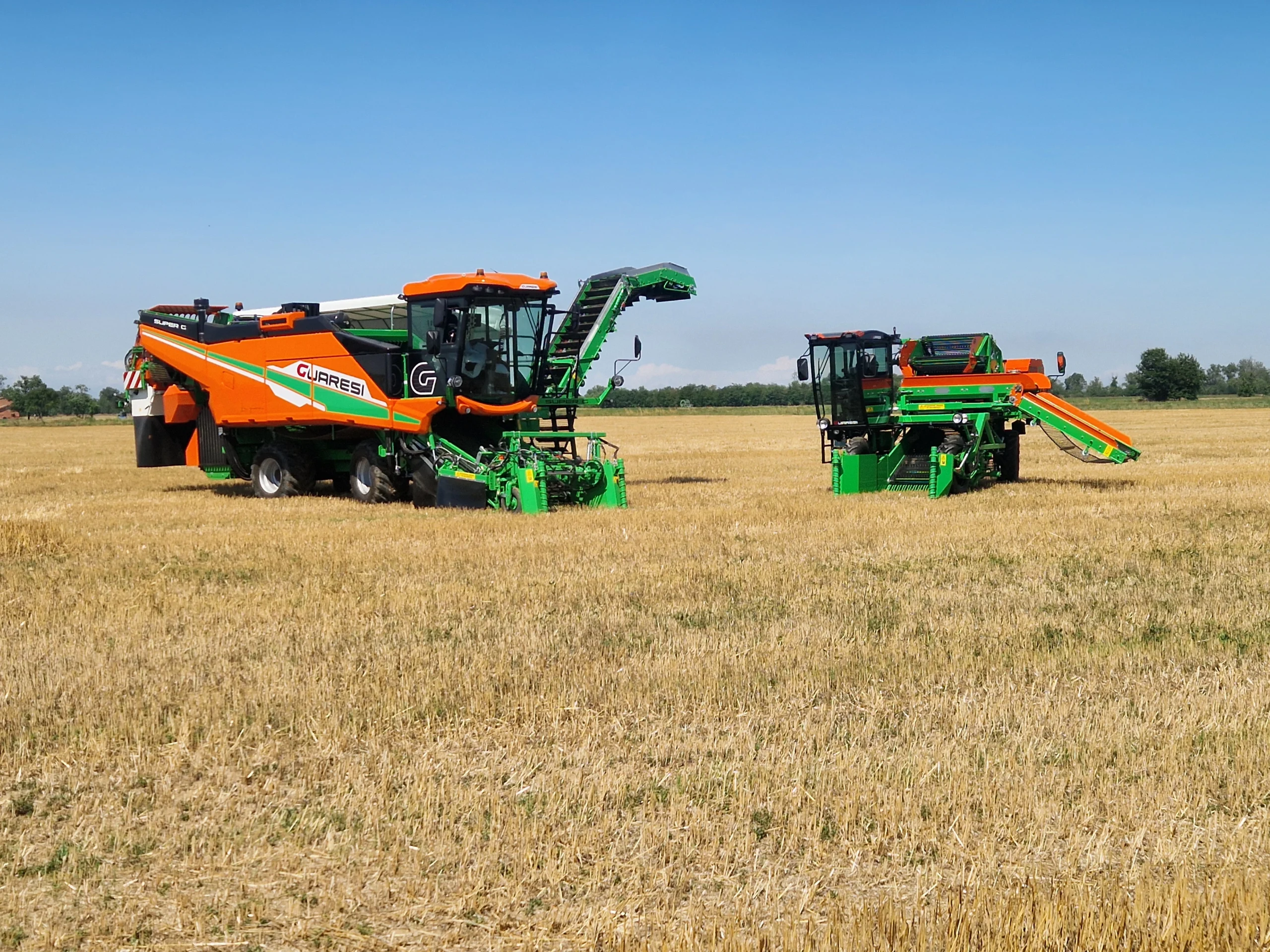
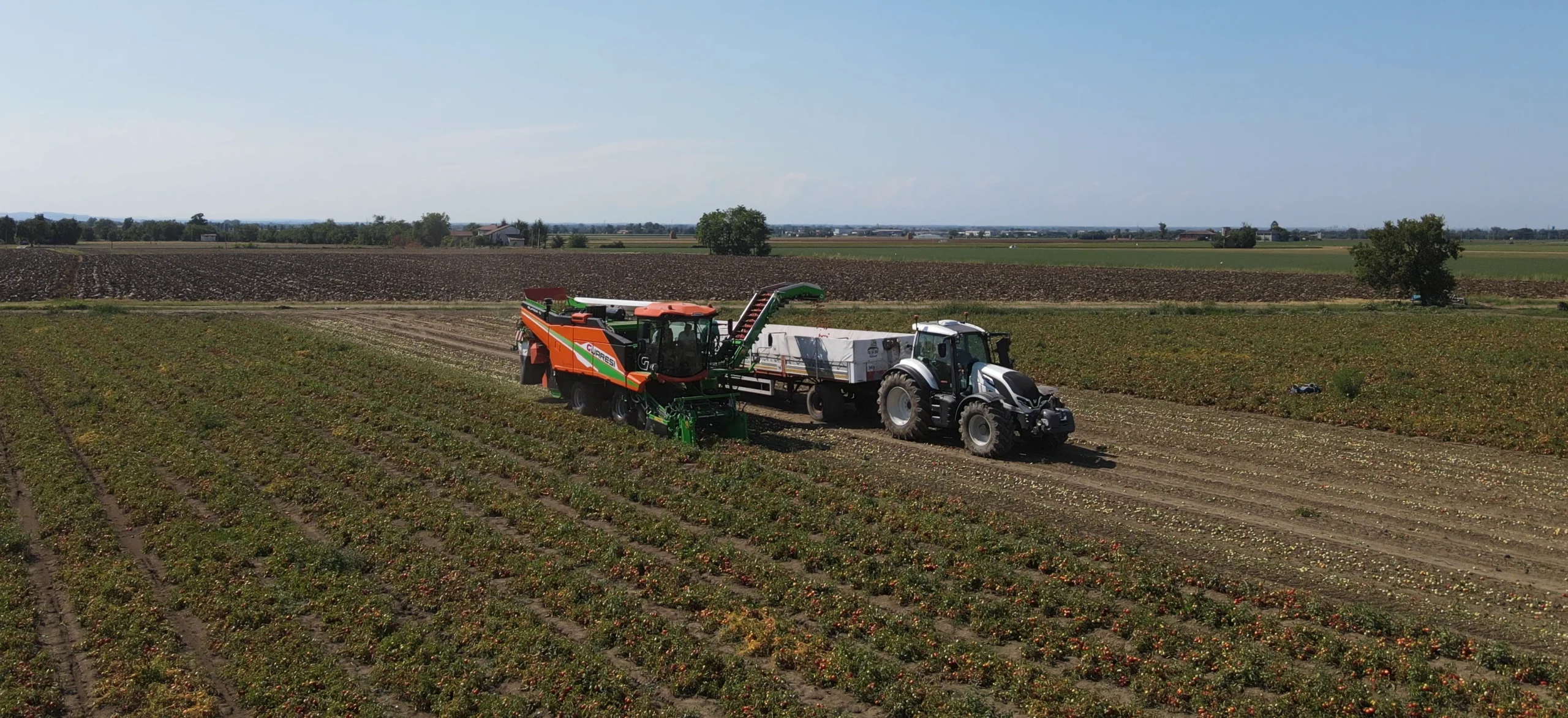

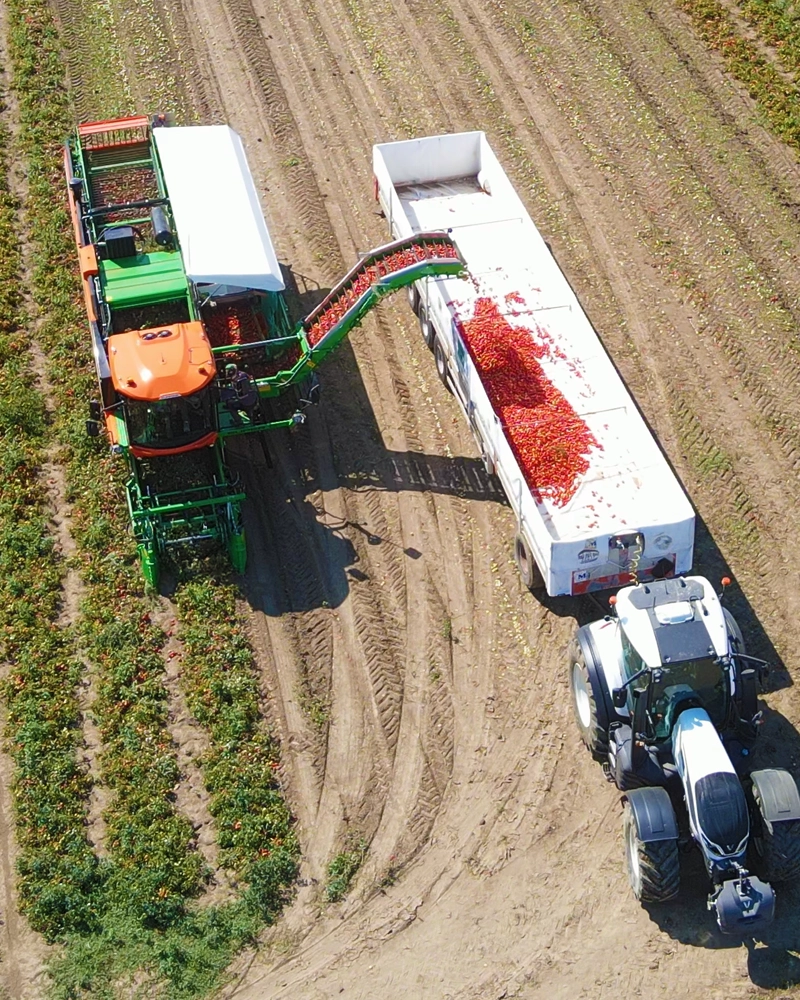
The LAERTHES PROJECT focuses specifically on technical solutions in line with the guidelines of the European Community and is therefore aimed particularly at farmers in the Mediterranean region. It integrates into an already established supply chain, ensuring that the final product is clearly distinguishable from that produced in other continents.
Guaresi brings its long history and experience in the sector (active since 1932). Ecothea, a spin-off of the Politecnico di Torino with nine years of experience and completed projects, contributes its know-how and creativity in the field of full or hybrid electrification of power transmissions in agricultural and industrial off-road vehicles. The Politecnico di Torino provides its expertise to carry out and certify the performance of the prototypes both in the field and in the laboratory. Conesa contributes its agronomic knowledge and the fields in which to conduct testing, as well as its expertise in the industrial processing of harvested tomatoes into packaged products ready for supermarket shelves.
Electrification & bio-lubricants
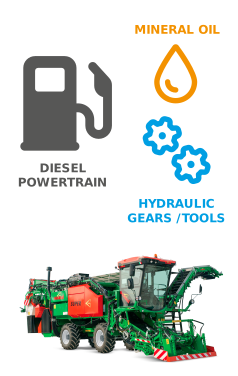
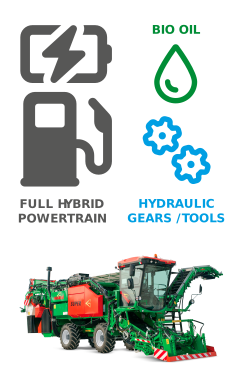
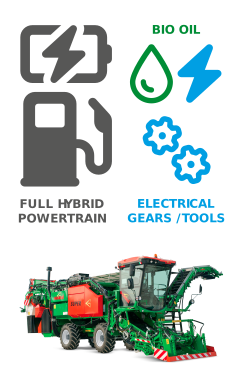
The innovative TECHNIQUE to address and overcome the challenge is ELECTRIFICATION – that is, the development of either Full Electric or hybrid transmissions (compact internal combustion engine combined with batteries and integrated control software). This will be the first technical phase of the project. The second phase will focus on a detailed analysis of every machine operation currently driven by hydraulic motors, and on progressively replacing these with electric actuators that require less power.
BIOLUBRICANTS: lastly, reducing the use of mineral oil and replacing it with biolubricants will significantly reduce the consumption of fossil-derived mineral oils, and in the event of any leakage, the environmental impact on the soil would be eliminated.

Important partnerships
Both the Full Electric and Hybrid solutions have attracted the interest of the agricultural machinery manufacturer Guaresi Spa, a world leader in industrial tomato harvesting.
Environmental impact compared to a traditional machine

Super G
Super G ECO
Super G ECO+
SUPER-G ECO / ECO+ savings
Fuel reduction: 25%
CO₂: >7 tonne eq./year
CO: 32.9 kg/year
HC: 1.8 kg/year
NOx: 3.8 kg/year
PM: 0.14 kg/year
Technical goals
A market study carried out between January and March 2024 among a panel of Guaresi’s key clients confirmed, among other findings, the strong interest of end users in innovations relating to:
Productivity increase
Increased hourly machine productivity (2-row head)
Better performance
Development of a single-row machine but with a smaller engine
Full Electric
Introduction of the Full Electric solution for the small front-runner model (MINI G)
Electric actuators
Research and application of electric actuators to fully or partially replace the complex hydraulic system used to operate the machine’s working components
Lower maintenance required
Reduction of the machine’s hydraulic maintenance requirements, with a particular emphasis on minimising leaks or spills of mineral oil onto the soil
Expected impact
Strong interest in the absolute or quantitative energy savings achievable through full electric or hybrid solutions, together with the related qualitative improvement, namely, the reduced use of fossil energy and the resulting positive impact on CO2 emissions into the atmosphere.
Absolute energy savings
Reduced use of fossil energy
Reduced CO2 levels
The industrial tomato context

The Life Laerthes 24 Project No. 101215488 potentially has the entire European agricultural sector as its field of application. Indeed, while the two specific ECO tomato-harvesting prototypes represent the project’s main task, the development of electric or hybrid (internal combustion–electric) kinematic systems will generate a body of know-how that can be flexibly applied to all self-propelled agricultural machinery currently in production. This technology can therefore be incorporated into agronomic production processes that use traction or self-propelled equipment, and could in turn be applied to other, even more significant sectors such as fresh vegetable and cereal harvesting, as well as tractors and machinery for handling earth and goods.
However, before proceeding, it is worth taking a closer look at the specific context in which the two prototypes will operate – the industrial tomato fields.
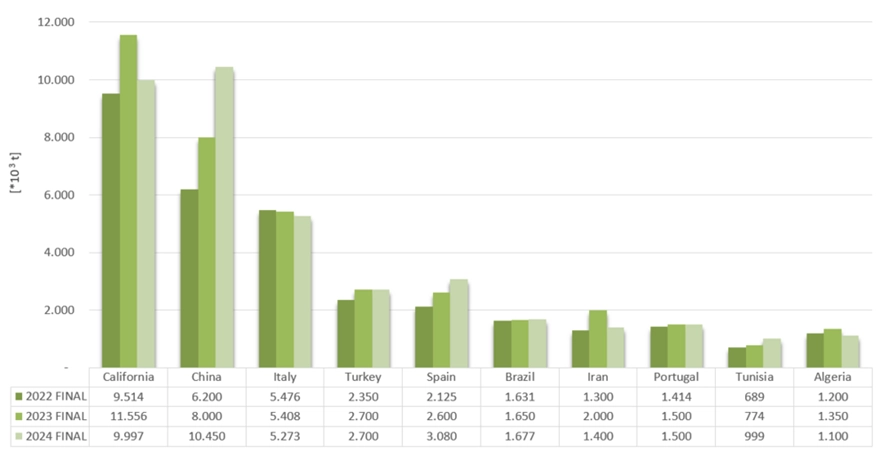
In 2024, global tomato production reached 160 million tonnes, but only 40 million tonnes consisted of varieties intended for industrial processing into purées, peeled tomatoes, and concentrates. The other 120 million tonnes, therefore, consist of different varieties grown in open fields or in protected crops for fresh consumption. The distribution of these 40 million tonnes has, naturally, grown since the latest map published by the World Processing Tomato Council wpct.com
This shows that processing tomato production is divided into three main areas:
- California and, more recently, also Arizona to the south and Oregon to the north
- The EU (Italy-Spain Portugal) and Turkey to create a Mediterranean hub
- China
- Brazil and Chile, with production cycles that run counter to those of the Northern Hemisphere
Agronomic techniques and supply chain management (from seed to packaged product on the shelf) vary greatly across the identified areas. For this reason, the project is, as stated in the introduction, strongly focused on cultivation and processing within the European Union.
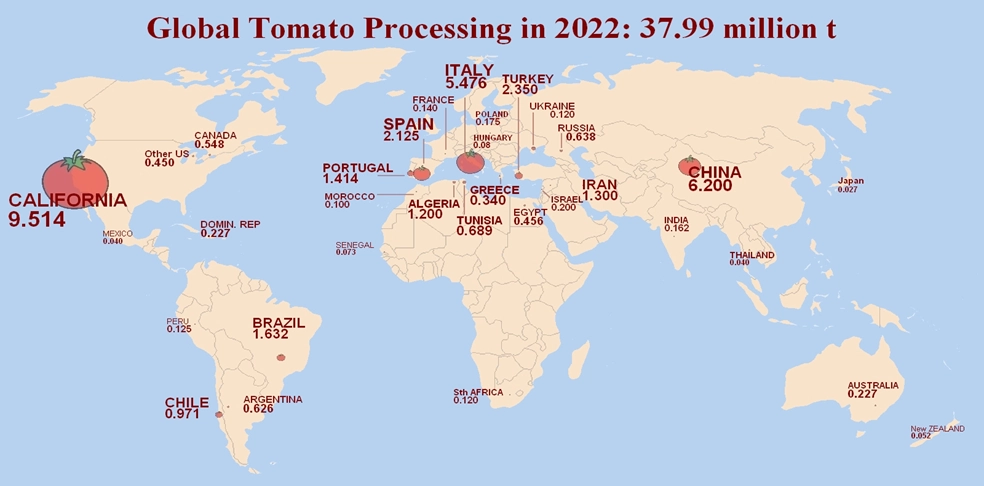
In this regard, it is worth noting Italy’s position as the world’s third-largest producer, and the volatile position of China, whose production is almost entirely export-oriented and managed according to rules that differ greatly from those of the European supply chain, resulting in clear shortcomings in both quality and price.
By contrast, within the European Community, regional Producers’ Organisations (OPs) indirectly support quality control and regulatory systems that balance production volumes with purchase prices. These mechanisms not only protect both the agronomic and processing stages but also align closely with the principles of the Laerthes Project
The other major competitor, California, is in the midst of significant change, moving away from an approach once centred on product and process integrity towards one now increasingly driven by simplification.
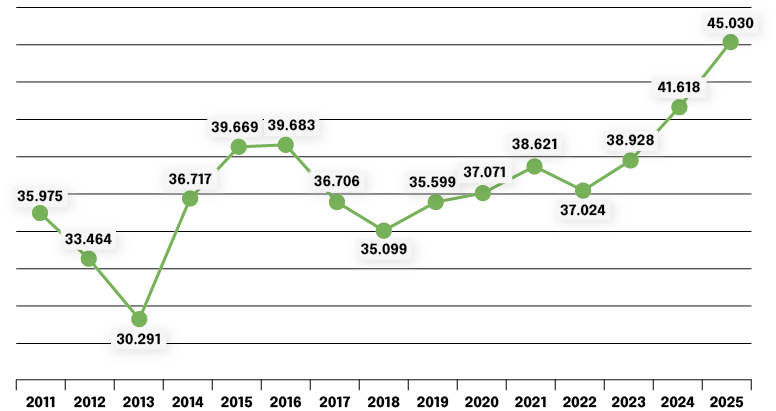
? Industrial tomato area in Northern Italy [Ha]
Finally, to gain a clearer understanding of the sector, it is useful to examine some data and indicators collected in Northern Italy — specifically in the Parma area, which, incidentally, is where the concept of tomato processing first emerged in the mid-19th century. The aim was to preserve tomatoes, initially in tin-plated cans and later in glass or Tetra Pak, thereby extending the availability of what is otherwise a highly seasonal product.
Looking at the cultivated areas, there has been a steady increase: from 37,000 hectares in 2022 to almost 39,000 in 2023, nearly 42,000 in 2024, and finally a record year in 2025 with 45,000 hectares.
Over the same period, production fell from 3,100,000 tonnes to 2,900,000 tonnes, then to 2,800,000 tonnes, and finally to just over 2,400,000 tonnes.
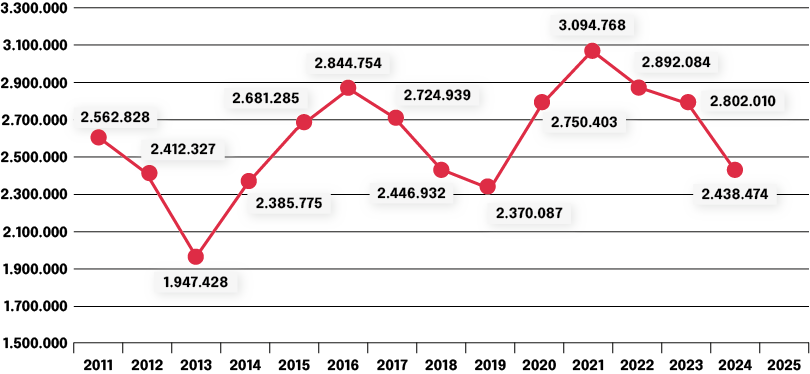
? Production [t]
Production and Productivity of Industrial Tomatoes – OI Northern Italy
| 2022 | 2023 | 2024 | 2025 | |||
| Surface area (hectares) | 37.024 | 38.928 | 41.618 | 45.030 | ||
| Production (tonnes) | 3.094.768 | 2.882.084 | 2.802.010 | 2.438.474 | ||
| Yield (tonnes/hectare) | 83,6 | 74,1 | 67,3 | 54,1 |
These reference data show a positive trend in investment in industrial tomato cultivation – a sector whose appeal is supported by strong demand and the geographical proximity of processors – but a decline in yields, mainly due to the challenging weather conditions that affected the crop during key stages of its growing cycle. However, the trend in cultivated area remains the most important indicator of producer confidence. Thanks to supply chain oversight mechanisms implemented through balanced EU regulations, farm-gate prices are protected, allowing producers to plan for the long term and maintain a focus on quality. Where such a system is not in place (as in China), 2025 saw an arbitrary 40% reduction in the area devoted to tomato cultivation, with a considerable share of production apparently redirected to North America.
Project development
The overarching goal of the Life Laerthes Project is to provide European farmers with self-propelled agricultural machinery designed to achieve zero atmospheric pollution. The partners have identified two main approaches to this aim: full electrification of the Mini G machine and hybridisation of the Super G machine.
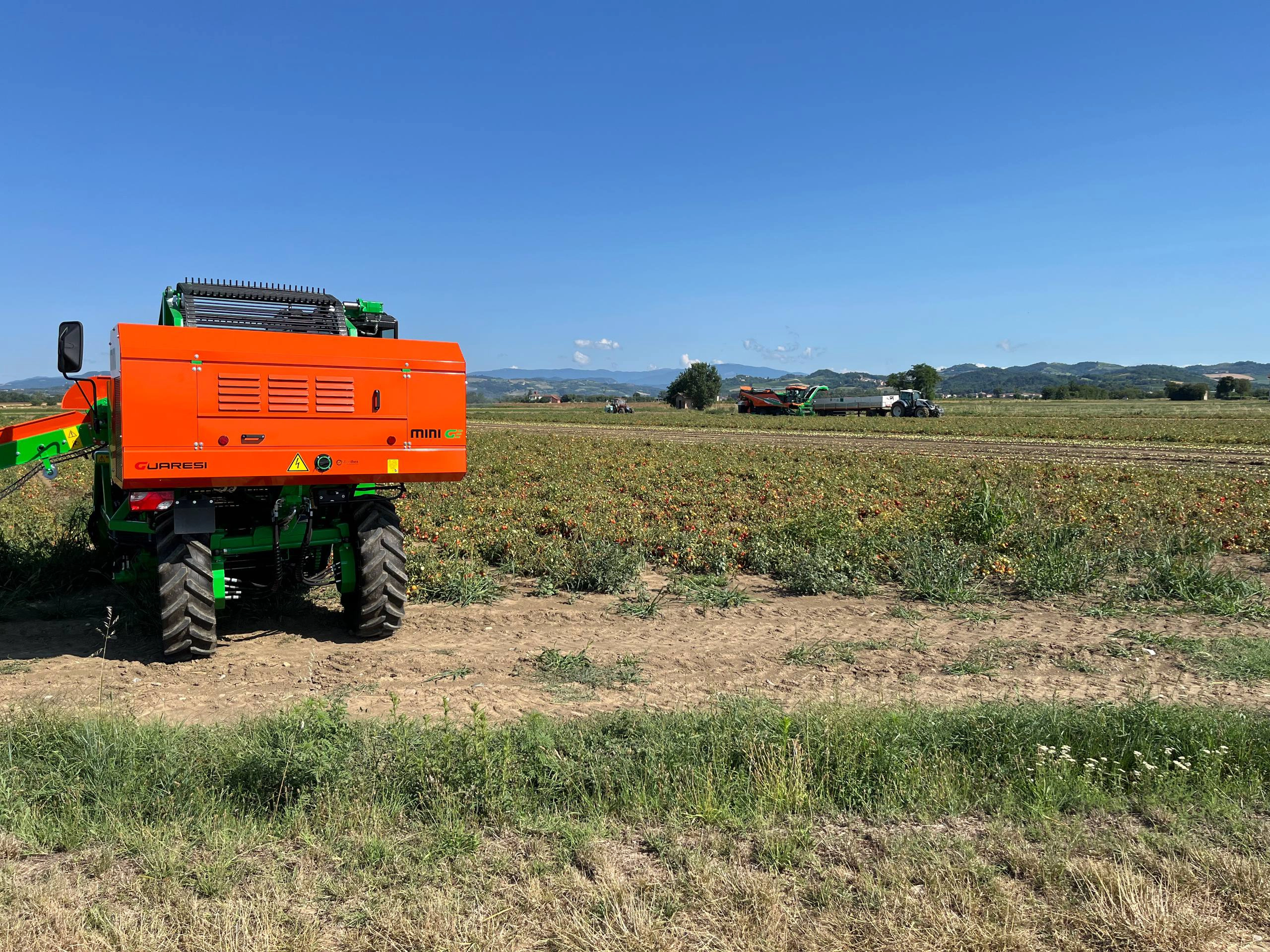
A first project has been defined, based on the current Guaresi Mini G model, which is used to open and turn over the rows at the edges of the fields, making the harvesting and selection work of the Super G model easier. In this case, a solution of total electrification has been developed by replacing the internal combustion diesel engine with an electric motor powered by a modular rechargeable battery. The prototype, designed and built during 2024, was presented at the 2024 edition of the Bologna International Agricultural Machinery Exhibition, EIMA ’24. The prototype was field-tested during the 2025 season for around 40 hours, performing without issues. In its current configuration, it demonstrated a consistent operating autonomy of over two hours and a full recharge time of less than two hours when connected directly.
Field testing showed the need to both increase operating autonomy and reduce power consumption, partly by electrifying some of the functions that are currently hydraulic.
In this case, the complete removal of the internal combustion engine and its replacement with an electric motor powered by rechargeable batteries – often charged on farms using electricity generated from photovoltaic panels – fully aligns with the primary goal of the Laerthes Project.
A second line of research and development has also been defined, aimed at drastically reducing atmospheric emissions from the Guaresi Super G machine. In this case, the design parameters are far more demanding, as this machine (used for harvesting and sorting industrial tomatoes) must guarantee an operating autonomy of no less than 8 hours.
The project was therefore structured to ensure the machine’s normal operation while improving the working conditions of the combustion engine, with the aim of enhancing the overall efficiency of the harvesting process. The harvesting of industrial tomatoes represents a key stage in the product’s supply chain, and improving its efficiency has a direct impact on both the final products and the people involved.
To achieve this, an electric motor will operate in parallel with the current combustion engine, with the ultimate goal of reducing fuel consumption and, consequently, pollutant emissions.
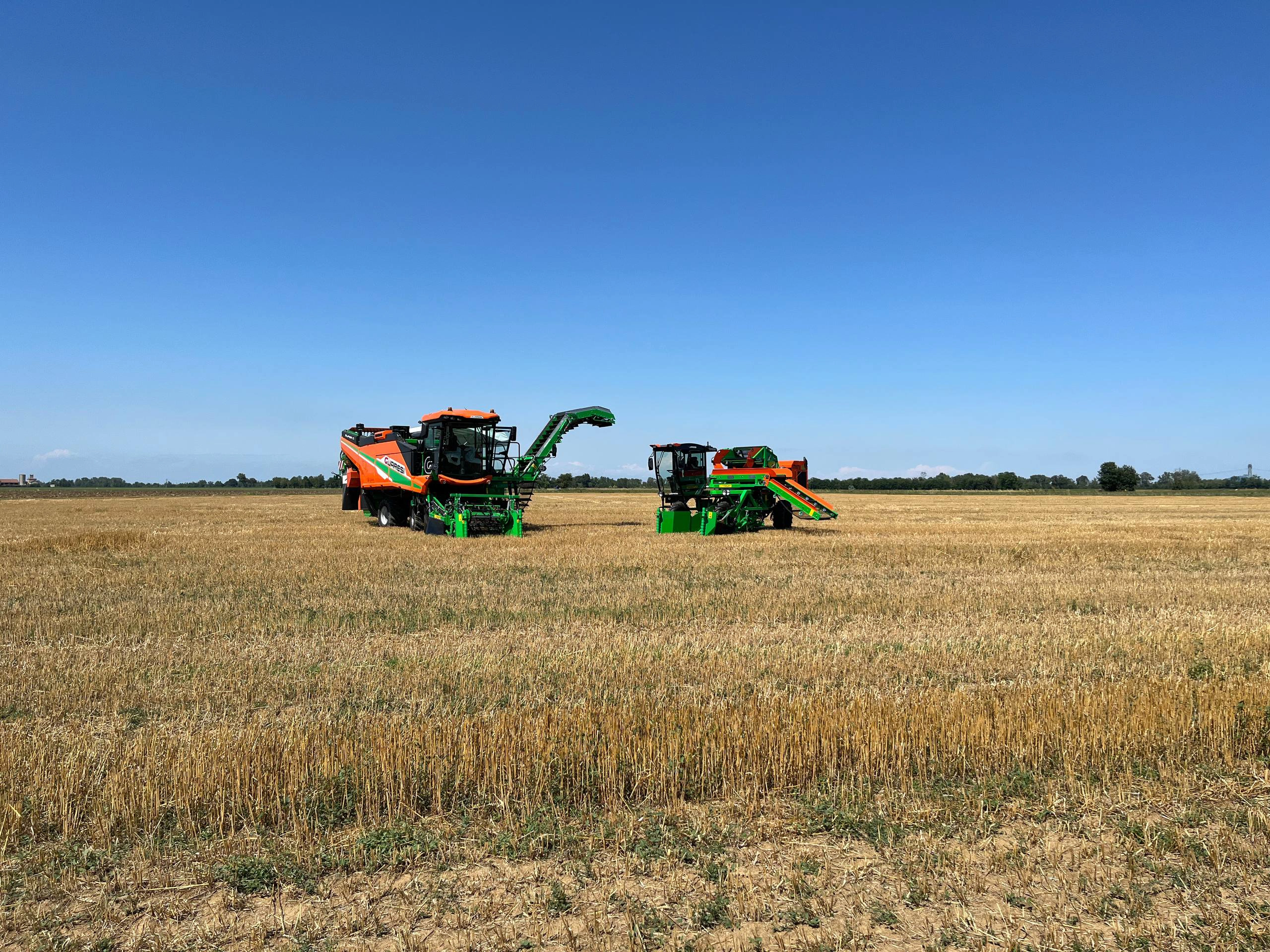
Download the Life Laerthes brochure
Partners

Guaresi S.p.A.
Founded in 1932, Guaresi S.p.A. is an Italian company that manufactures specialised agricultural equipment for horticultural harvesting, especially that of tomatoes. Its two production facilities combine technological innovation, high manufacturing standards and a strong commitment to environmental and social sustainability. Guaresi uses Stage V low-emission engines and advanced electronic sorting systems that automate harvesting, thus reducing labour needs and improving working conditions.
Via Virgiliana, 169/A – 44012 Pilastri (FE)
guaresi@guaresi.com

Ecothea Srl
Ecothea Srl is an Italian company whose operations are centred around agri-construction sector vehicles and systems. The company develops advanced technological solutions that aim to boost efficiency and reduce the environmental impacts of professional vehicles. Ecothea’s mission is to design and develop electric and hybrid transmissions capable of cutting emissions from agricultural and industrial machinery, for a rapid and safe transition towards more sustainable mobility.
Corso Castelfidardo 30/a – 10129 Turin (TO)
info@ecothea.it

Politecnico di Torino
The Politecnico di Torino is one of the foremost technical universities in Italy and in Europe, renowned for the excellence of its research and the education it provides in the sectors of engineering, architecture, design, and applied technologies. Thanks to a strong international orientation and numerous partnerships with businesses and institutions, the Politecnico excels in innovation, sustainability, and technology transfer, offering solutions and expertise at the service of society.
Corso Duca degli Abruzzi, 24 – 10129 Turin (TO)
politecnicoditorino@pec.polito.it

Conesa Group
Conesa Group is a Spanish multinational, a leader in the sector of tomato processing. Founded in 1976 in Badajoz as “Conservas Vegetales de Extremadura”, today it boasts a production capacity of nearly a million tons of fresh tomatoes per harvest. The business operates out of nine sites located across Spain, Portugal, China and the United States, with a focus on innovation, quality and sustainability.
Carretera Villafranco-Balboa, Km 1.5 – 06195 Badajoz
info@conesagroup.com
News
Discover the latest Life Laerthes news – innovation, sustainability, and technology shaping the future.
Life Laerthes Project – Presentation at Agritechnica 2025
Fyeld debuts at Agritechnica with the Life Laerthes project
Life Laerthes @ Agritechnica 2025
Visit us in "Room 13/14"
Stay up to date
Subscribe to the Life Laerthes newsletter and stay up to date on the latest news in innovation, sustainability, and new technologies.
Newsletter subscription
"*" indicates required fields

Co-funded by the European Union.
Views and opinions expressed are however those of the author(s) only and do not necessarily reflect those of the European Union or CINEA.
Neither the European Union nor the granting authority can be held responsible for them.
LIFE LAERTHES- Project 101215488